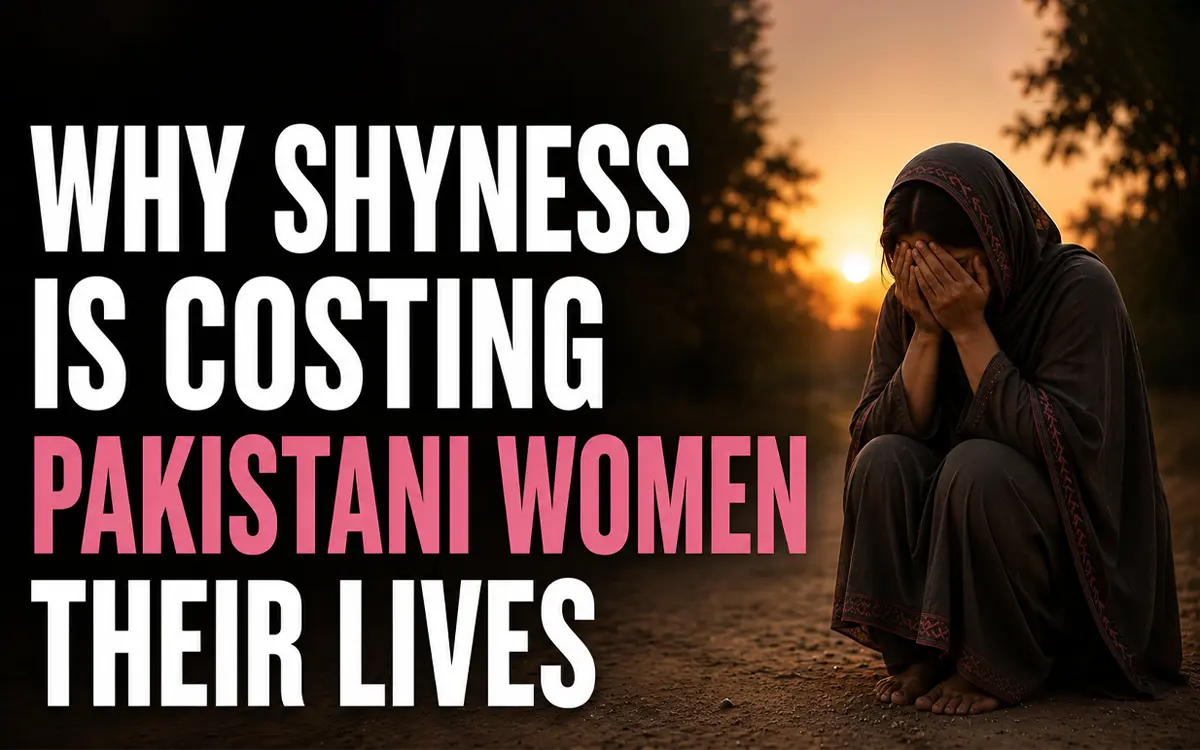
The phrase shame or shyness is often treated as a modest virtue in Pakistani society. But when it comes to healthcare, this silent compliance is carrying a devastating price tag. For thousands of Pakistani women, cultural conditioning is quite literally costing them their lives.
Every year, an estimated 90,000 women in Pakistan are diagnosed with breast cancer, and nearly 40,000 lose their battle to it. Pakistan has the highest rate of breast cancer in Asia. The tragedy isn’t just medical; it is intensely social. A staggering majority of these cases are diagnosed at stage 3 or 4, not because the science to save them doesn’t exist, but because the silence surrounding their own bodies kept them from seeking help until it was too late.
The Prison of Haya: When Modesty Silences Pain
From a young age, Pakistani girls are conditioned to practice haya (modesty) and sharm (shyness). While these values are woven into our cultural and religious fabric, they are frequently misinterpreted in ways that force women to disconnect from their physical health.
Women are taught to ignore, hide, or minimize changes in their bodies. Discussing reproductive health, menstruation, or breasts is considered taboo, even within the safety of close female relationships. When a woman notices an unusual lump or a persistent change, her first instinct is often to suppress it. She hopes it will go away on its own, dreading the vulnerability required to say the words out loud.
This internalized shyness delays the crucial first step of early detection: breast self-examinations. When looking at or touching your own body is framed as shameful, life-saving self-awareness is replaced by dangerous neglect.
The Joint Family Microcosm: No Space for Vulnerability
The traditional joint family system is a cornerstone of Pakistani society, offering a built-in support network of love and shared responsibilities. However, for a woman navigating a potential health crisis, this highly communal environment can inadvertently become a panopticon of surveillance and a barrier to privacy.
In a house where multiple generations live together, true privacy is a luxury. A woman rarely has a moment entirely to herself to perform a self-examination without interruption. Furthermore, her schedule is rarely entirely her own. If she needs to visit a doctor, it is rarely a private affair. She must explain her absence to her mother-in-law, request household expenses from the male breadwinners, and arrange for a male family member or elder to escort her to the clinic.
For a young woman, explaining to her father-in-law or brother-in-law that she needs to see a specialist for a breast issue is an excruciating prospect. Rather than crossing that boundary of traditional modesty, many women choose to suffer in silence, dismissing severe symptoms as temporary discomfort just to maintain household harmony.
The Stigma of Impurity and Broken Legacies
Beyond the logistical hurdles of the joint family lies a darker psychological barrier: the profound shame and stigma attached to a breast cancer diagnosis. In many communities, breast cancer is viewed through a lens of superstition, moral failure, or physical impurity. Because the disease affects an organ deeply tied to femininity, motherhood, and sexuality, a diagnosis is often treated as a loss of womanhood. Some families view a breast cancer diagnosis not as a medical emergency, but as a blemish on the family’s honor or an obstacle to their daughters’ marriage prospects.
There is a pervasive, heartbreaking fear among mothers that if the community finds out they have breast cancer, their daughters will be labeled as genetically flawed or cursed, ruining their chances of finding a good match. To protect their children’s futures, these mothers swallow their pain, keeping their illness a secret until the disease can no longer be hidden by layers of clothing.
Pink Ribbon: Breaking the Silence, Saving Lives
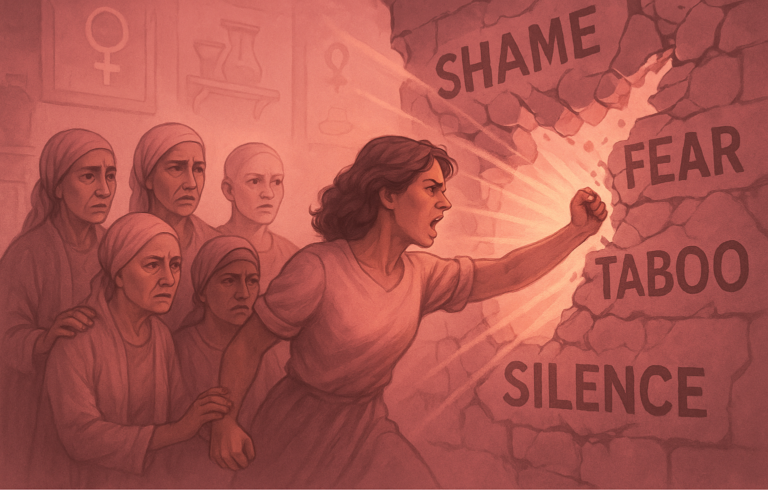
This crisis cannot be solved by medical equipment alone; it requires a cultural shift. At Pink Ribbon, we are working to decouple breast health from shame and realign it with what it truly is: a fundamental human right.
1 Changing the Language
We need to change how we talk about this disease. Breast cancer is not a moral issue; it is a cellular malfunction. By speaking openly about symptoms in plain, accessible language, we normalize the conversation and strip away the power of stigma
2 Onsite Clinical Care
To directly combat the barriers of the joint family system, Pink Ribbon has dedicated, female-led clinical services. At our hospital, women can access diagnostic care in an environment that respects their privacy and dignity, ensuring they don’t have to explain their symptoms to a panel of family gatekeepers
3 Reclaiming True Strength
Prioritizing your health is not selfish, nor is it immodest. Taking care of your body is a responsibility to yourself and to the family that relies on you. A healthy mother, daughter, or sister is the foundation of a thriving home.
A Call to Action for Every Pakistani Household
We must dismantle the deadly equation where shyness equals virtue and self-neglect equals honor.
To Husbands and Fathers – Become active partners in the health of the women in your lives. Create an environment where your wives and daughters can tell you when they are unwell without feeling awkward or ashamed.
To Mothers-in-Law – Use your position of influence in the joint family to protect the young women under your roof. Encourage them to seek medical attention early, rather than advising them to bear pain quietly.
To Every Woman – Your life is precious. A lump is not a source of shame; it is a sign to seek medical care.
When caught in its earliest stages, the survival rate for breast cancer is greater than 90%. The cure exists, but it requires us to find our voices. Let us bury the silence before it buries another generation of our women.
Join Pink Ribbon Pakistan in breaking the stigma. Support our clinical services, share life-saving information, and help us build a future where no woman dies of shyness.
Author:
Syeda Naima Kazmi