
Introduction: The Growing Importance of Mammogram Screening
In 2026, the conversation around breast cancer has shifted from fear to careful prevention, and the focus of this transformation is the mammogram. A routine medical test has now become one of the most important tools in reducing breast cancer mortality in the world. With millions of women diagnosed each year, early detection is no longer an option; it’s essential.
A mammogram is like an early warning. Rather than waiting for symptoms to appear, it helps identify abnormalities in breast tissue at a point when treatment is most effective. This simple yet life-saving screening has helped countless individuals detect cancer early, remarkably improving survival rates. Based on long-term data, it shows from the late 1980s (when mammography became common worldwide), breast cancer mortality in the U.S. has decreased by approximately 40%. The majority of this decline is due to early detection via annual screening starting at age 40 (The American College of Radiology (ACR) and Society of Breast Imaging). Diagnosing cancer early often means less aggressive treatments, lower healthcare costs, and a much higher chance of recovery. As healthcare systems evolve, the mammogram continues to play a major role in the prevention of breast cancer all over the world.
What Kind of Lumps Mammography Detects
Mammography is a medical imaging procedure that aids in detecting various kinds of breast lumps, including non-threatening (benign) and possibly cancerous (malignant) formations. It can identify masses that are too small to be felt in a physical exam, rendering it highly effective for early detection.
- Benign (Non-Cancerous) Lumps
Typical non-cancerous lumps consist of cysts, fibroadenomas, and calcifications. Cysts present as sacs filled with fluid and typically show smooth, rounded margins on a mammogram. Fibroadenomas are solid, firm masses frequently found in younger women and look well-defined and consistent. Benign calcifications are typically dispersed or circular and are not associated with cancer.
- Malignant (Cancerous) Lumps
Tumors typically have an irregular shape and possess unclear or jagged edges. They can display clustered microcalcifications, which are small calcium deposits grouped closely together. These patterns may indicate early breast cancer and make it necessary for more tests.
- How Mammography Differentiates Lumps
Mammography identifies lumps by their shape, size, density, and border features. Radiologists carefully evaluate if a lump is smooth and clearly outlined or irregular and thick. Further imaging techniques such as ultrasound or biopsy might be suggested for confusing situations to guarantee precise diagnosis and appropriate treatment planning.
The Link Between Mammogram Screening and Reduced Mortality
The role of the mammogram in reducing breast cancer mortality is supported by decades of clinical research and real-world data. Countries with standard screening programs have consistently reported an outstanding decrease in death rates. The reason is simple: early-stage cancers are far easier to treat than advanced ones.
When breast cancer is detected early through a mammogram, the five-year survival rate exceeds 90% (American Cancer Society). The most recent data (for patients diagnosed between 2015 and 2021) actually suggests the outlook is even better than 90% when the cancer is caught early:
- Localised Breast Cancer: When the cancer is found only in the breast (often via mammogram) and has not spread to lymph nodes, the 5-year relative survival rate is over 99% (National Breast Cancer Foundation).
- Regional Breast Cancer: If the cancer has spread to nearby lymph nodes, the 5-year survival rate is approximately 87% (National Breast Cancer Foundation).
- All Stages Combined: Even when including late-stage diagnoses, the overall 5-year survival rate for breast cancer is about 91%–92% (National Breast Cancer Foundation).
In contrast, cancers diagnosed at later stages often require more aggressive treatments and have lower survival rates. This clear difference highlights why regular screenings are so important.
Another important factor is the ability of mammograms to detect cancers before symptoms appear. Many breast cancer cases do not cause pain or noticeable changes in the early stages. Without routine screening, these cancers might go unnoticed until they have progressed further.
In 2026, the worldwide usage of mammogram screening has also led to better treatment planning. Doctors can plan therapies based on the size, location, and type of tumor detected early, improving patient outcomes. This insightful approach has made mammograms a foundation of modern oncology.
Technological Advancements in Mammogram Screening in 2026
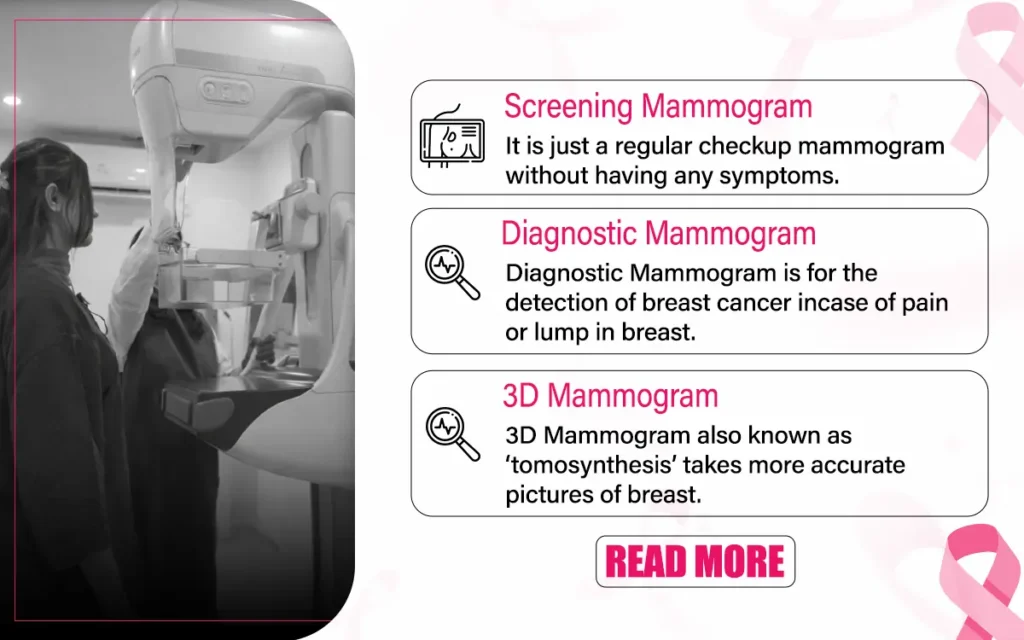
The evolution of the mammogram has been remarkable, especially in recent years. Today’s screening methods are faster, more accurate, and more comfortable than ever before. One of the most important innovations is 3D mammography, which takes multiple images of the breast from different angles. This creates a detailed, layered view that improves detection accuracy, particularly in women with dense breast tissue.
Another major breakthrough is the integration of AI-powered diagnostics. These systems analyse mammogram images in seconds, identifying patterns that might be missed by the human eye. In many healthcare settings, AI is used alongside radiologists to reduce errors and improve accuracy.
Portable and mobile mammogram units are also making a big difference. These units bring screening services to rural and underserved communities, making sure that more people have access to life-saving tests. By removing barriers such as distance and cost, these initiatives are helping to close the gap in healthcare imbalance.
Additionally, modern mammogram machines use lower radiation doses while maintaining high image quality. This makes the procedure safer for repeated use, encouraging more individuals to stick to regular screening schedules.
Benefits of Regular Mammogram Screening
Regular mammogram screening offers multiple benefits, many of which go beyond early cancer detection.
- Peace of Mind
One of the most important advantages is peace of mind. Knowing that you are actively monitoring your health can reduce anxiety and empower you to take control of your well-being.
- Early detection saves from invasive treatments
From a medical perspective, early detection through mammograms often leads to less invasive treatments. Patients diagnosed at an early stage may avoid chemotherapy or extensive surgery and go for more targeted therapies. This not only improves recovery times but also enhances overall quality of life.
- Early detection may also save money
Another key benefit is cost-effectiveness. Treating early-stage cancer is generally less expensive than managing advanced disease. For healthcare systems, widespread mammogram screening reduces the financial burden related to long-term cancer care.
- Better public health outcomes
Regular screenings also help in better public health outcomes. As more individuals participate in mammogram programs, the overall mortality rate continues to decline. This collective impact shows the power of protective healthcare.
Challenges and Limitations of Mammogram Screening
Overdiagnosis is a problem. Some cancers found by mammograms grow very slowly and may never become dangerous. These cancers are hard to judge, often leading doctors to treat them just to be safe.
Access to mammogram services is not equal in the world. In low-income areas, healthcare centres and low awareness stop many people from getting regular screening. Fixing these gaps is important to improve the life-saving benefits of mammograms.
Conclusion: Mammogram as a Lifesaving Tool in 2026 and Beyond
The role of the mammogram in reducing breast cancer mortality in 2026 cannot be exaggerated. It has transformed the way breast cancer is detected, diagnosed, and treated, offering hope to millions of people in the world. By enabling early detection, improving treatment outcomes, and decreasing death rates, mammograms have become a foundation of modern healthcare.
As technology continues to advance, the effectiveness of mammogram screening will only improve. From AI-driven diagnostics to mobile screening units, the future of breast cancer detection looks optimistic. However, the key to success lies in awareness and accessibility. Encouraging regular screenings and ensuring that everyone has access to these services will be critical in the coming years.
Mammography at Pink Ribbon
Pink Ribbon Hospital employs cutting-edge technology to enhance the precision and efficiency of mammography for early detection of breast cancer. The hospital features advanced digital mammography systems that generate high-resolution images, enabling radiologists to detect even the tiniest alterations in breast tissue. These sophisticated devices minimize image noise and enhance clarity, aiding in the detection of early abnormalities that may not be apparent in conventional imaging. Pink Ribbon Hospital employs computer-assisted detection tools that help physicians examine images more accurately and minimize the likelihood of human mistakes. The incorporation of low-dose radiation technology guarantees patient safety while preserving excellent diagnostic quality. The hospital adheres to contemporary screening procedures and routinely upgrades its equipment to meet global standards. Skilled female technologists improve patient comfort and precision throughout the process. With these advancements, Pink Ribbon Hospital guarantees dependable, timely, and efficient breast cancer detection, greatly enhancing treatment results.
The message is clear: a simple mammogram can save lives. By prioritizing early detection and accepting innovation, we can continue to reduce breast cancer mortality and move closer to a future where this disease is no longer a leading cause of death.
Frequently Asked Questions (FAQs)
1. Is mammography painful?
Mammography can cause some discomfort due to breast compression, but it’s usually for seconds. Most people describe it as pressure rather than pain, and it lasts only a few seconds for the image.
2. How long does a mammogram take?
The entire appointment typically takes 15 to 30 minutes, though the actual imaging process is much shorter.
3. How often should I get a mammogram?
For most women, annual or twice-yearly screenings starting at age 40 are recommended. However, your doctor may suggest a different schedule based on your risk factors.
4. Can mammography detect all breast cancers?
While highly effective, mammography isn’t perfect. Some cancers may not be visible, especially in dense breast tissue, but Pink Ribbon Hospital offers 3D mammography that takes more accurate images of dense breast tissues.
5. Is mammography safe?
Yes, mammography is considered safe. It uses a very low dose of radiation, and the benefits of early detection far outweigh the minimal risks.