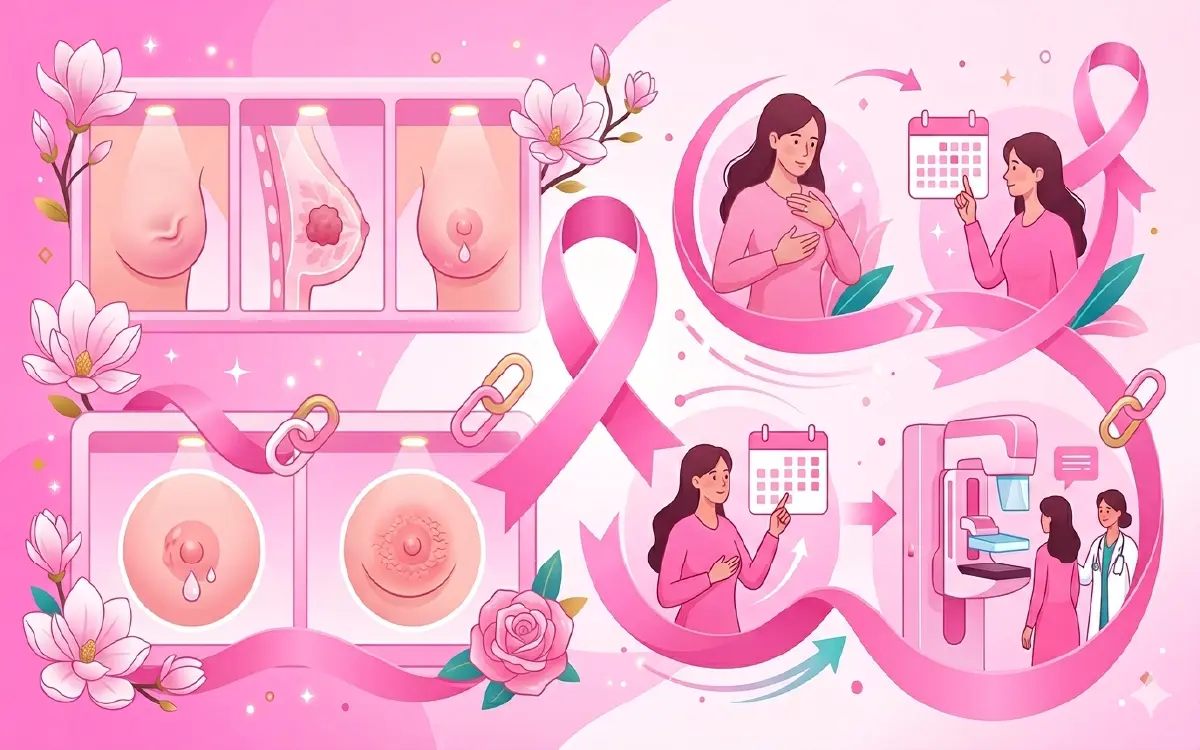
Breast cancer is one of the most common types of cancer that affects women in the world, but when it’s detected early, it is mostly treatable. Awareness is one of the most important stages of fighting with this disease. Many women think that breast cancer always means a painful lump, but in reality it’s more complex than this. Early warning signs can be mild, painless and easy to miss.
Understanding what you should be looking at and then acting on those signs immediately can create a life-saving difference. This article explains the early warning signs of breast cancer in a clear and practical way, which helps you to stay informed and proactive about your health.
Why Early Detection Matters
Early detection highly increases the chances of successful treatment. When breast cancer is detected in early stages, it usually is smaller and has not spread, and it can be treated with less painful methods. Regular self-examination, clinical checkups, and screening tests like mammograms play a key role in identifying changes before they become serious.
Most of the women delay seeking help because they think symptoms are minor and are temporary. But even small or painless signs should not be ignored.
Understanding What’s Normal for You
Before talking about warning signs, it is very important to know what is normal for your body. Every woman’s breast is different in size, shape and texture. Some women’s breasts are naturally lumpy, especially during their menstrual cycle.
By becoming familiar with how your breasts usually look and feel, you will notice unusual changes in a better way. Regular self-checkups can help you build this awareness.
A Lump or Thickening in the Breast or Underarm
One of the common signs of breast cancer is a lump in the breast or underarm area. But not all lumps are cancerous. Many are benign (non-cancerous), such as cyst or fibroadenomas. What makes a lump concerning?
- It feels hard or firm
- It has irregular edges
- It doesn’t move easily when touched
- It persists over time
Sometimes cancerous lumps are not painful; that’s why relying on pain alone is not enough. If you notice any new lump or thickening, it is important for you to get it checked by a professional.
Changes in Breast Size or Shape
Sudden or slow change in the size or shape of one breast can be an early sign. This might include:
- One breast appearing larger than the other
- Swelling in part of the breast
- Unusual asymmetry that wasn’t there before
Minor differences between breasts are normal, while noticeable or sudden changes should be evaluated.
Skin Changes on the Breast
Your breast’s skin can tell you important clues about any underlying issues. Watch for:
- Dimpling or puckering (often compared to the texture of an orange peel)
- Redness or inflammation
- Thickened skin
- Itching that doesn’t go away
These changes may tell you that there are some issues beneath the skin. Even if they seem like slight or normal skin changes, they still should not be ignored.
Nipple Changes or Discharge
Changes in the nipple are another important sign to watch for. These may include:
- Nipple turning inward (inversion) if it wasn’t like that before
- Pain or tenderness in the nipple
- Scaling, flaking, or crusting of the skin around the nipple
- Unusual discharge, especially if it has blood or occurs without squeezing
Nipple discharge can sometimes be harmless; any unexpected or continuing firm changes should be evaluated by a doctor.
Persistent Breast Pain
Breast pain is common and is mostly linked to hormonal changes, especially during menstruation. But pain that is:
- Localized to one specific area
- Persistent over time
- Not related to your menstrual cycle
can be a warning sign. Even though breast cancer is not usually painful in its early stages, it can sometimes cause slight pain.
Unexplained Changes in Veins or Texture
In some women, visible veins become more prominent on the surface of the breast. Although it can be normal due to exercise or temperature changes, sudden or unusual prominence of veins can be a sign of increased blood flow to a tumor.
In a similar way, any abnormal change in breast texture, such as a part of the breast feeling different from the rest of the breast, should be taken seriously.
Unusual Warmth or Redness (change from here)
If some part of the breast is warm or it appears red due to irritation or any infection, it can be a warning sign. In some cases, it can be inflammatory breast cancer, which is a more aggressive form which often does not have a lump.
These symptoms can be due to an infection, but if they don’t go away with treatment, one must get checked further.
When to See a Doctor
It’s important to seek medical advice if you notice:
- Any new lump or thickening
- Persistent pain in one area
- Changes in skin, nipple, or breast shape
- Unusual discharge
- Swelling in the underarm
Even if any of the changes turn out to be normal or harmless, it is always better to be safe than to be sorry. Early detection and consultation can give you peace of mind or provide you timely treatment.
The Role of Regular Screening
Although being aware of the symptoms is very important, getting yourself screened regularly adds another layer of protection. A mammogram can detect any changes way before the symptoms appear physically. General recommendations include:
- Women aged 40 and above should get regular mammograms
- Younger women with a family history are at higher risk and should get a doctor’s consultation for personalized screening plans.
Clinical breast exams and self-checks should also be part of your routine.
Breaking the Fear Around Breast Cancer
One of the biggest reasons women don’t get themselves screened is fear. Many women hesitate or delay visiting a doctor because they are afraid of the outcome.
One thing that people don’t understand is avoiding the issue does not automatically solve it. It only delays the diagnosis and keeps you in stress for a longer period of time. The truth is, most of the breast conditions are not even cancerous; even when cancer is detected, early treatment leads to better outcomes.
Being informed and proactive is empowering, not frightening.
Supporting Women Through Awareness
Breast cancer is not only an individual’s responsibility; it’s a shared responsibility. One should encourage the women in their lives, i.e., mothers, sisters, friends and daughters. Everyone should encourage women to be attentive and informed about their health.
Open communication about breast cancer can break the stigma, reduce fear in women and promote early action. Sometimes, a small reminder and shared knowledge can save a life.
Final Thoughts
Your body gives you signs when there’s something wrong. The key is to listen and act on it. Breast cancer does not always come with obvious signs; that is why awareness about early signs is so important.
Regular self-checks, timely screening and medical attention can make a huge difference. Just remember early detection isn’t just about cancer, but it is about giving yourself the best possible chance for effective treatment and recovery.
Stay aware, stay informed, and never ignore changes in your body.
FAQs
- What is usually the first sign of breast cancer?
The most common and early sign is a new lump or thickening in the breast or underarm. But not all breast cancers start with a lump; some begin with mild changes in the skin and shape. - Are breast lumps always cancerous?
No, not all breast lumps are cancerous. Many are non-cancerous, caused by cysts or any hormonal changes. Still, you should always get any new lump checked out by a doctor to rule out any serious conditions. - Can breast cancer cause pain in the early stages?
Breast cancer can be painless in the early stages, which is why it can go unnoticed. But continuous or unusual pain in one area of the breast should never be ignored, and it needs medical evaluation. - How can I tell if a breast change is serious?
Any new change, such as a lump, skin dimpling, nipple discharge or any change in size or shape, should be taken seriously and should be checked by a healthcare professional. - At what age should women start checking for breast cancer signs?
Women of all ages should be well-aware of their breasts to notice any changes. Regular screenings like mammograms are recommended starting at age 40 or earlier in case of any family history or other health risks. - How often should I do a breast self-exam?
It is recommended to self-examine your breasts once a month, ideally a few days after your menstrual cycle ends when breasts are less tender. Consistency will help you recognise what is normal according to your body. - What should I do if I notice a warning sign?
If you notice any change that does not seem normal, do not panic, but do not ignore it either. Schedule an appointment with a doctor as soon as possible for proper evaluation and guidance.